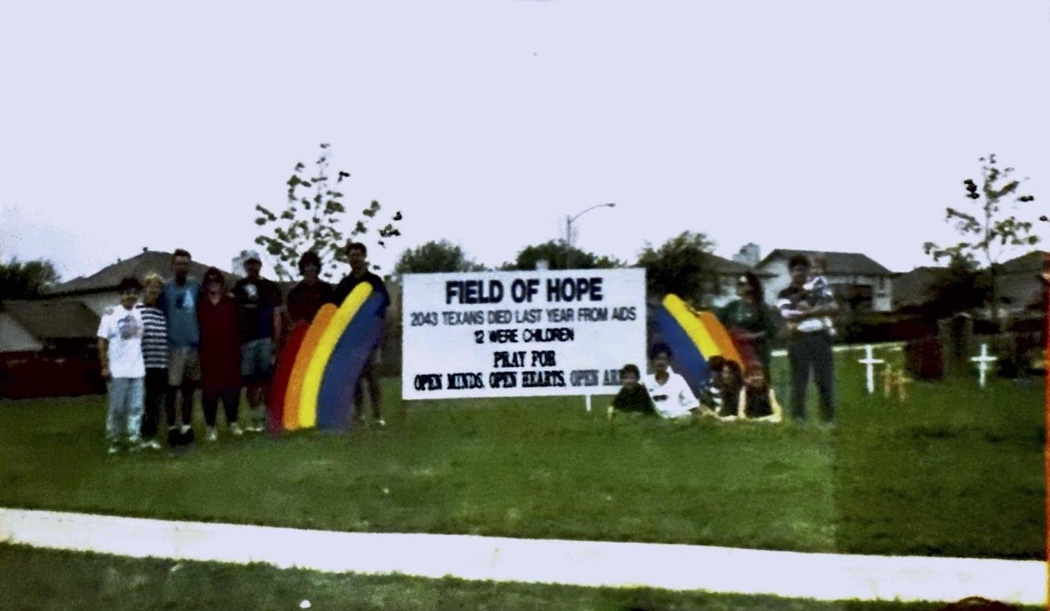
When St. Andrew’s erected our first Field of Hope in 1992, it began with a simple field of small white crosses with a sign indicating that the crosses were in honor of those who were living with HIV/AIDS, those who had passed and their caregivers. We were building a home in Wells Branch and after searching for a progressive church for some time, when I saw the Field of Hope, I knew I had found a church home to raise my twin babies.
The Field was set up at the beginning of Holy Week and remained up through Easter. One day, a member of the staff saw someone out in the field walking among the crosses and writing something on one of the crosses. When they spoke with them, they shared that they wanted to dedicate a cross in memory of their son and that they were so happy that a church was providing a place for them to honor their child. Soon the word spread, and more and more grieving parents and friends stopped by the field to decorate a cross in their loved one’s honor. Some simply wrote their name in marker (we kept a bucket of markers out by the field) and others created elaborate decorations, many in rainbow colors with photos, ribbons and flowers.
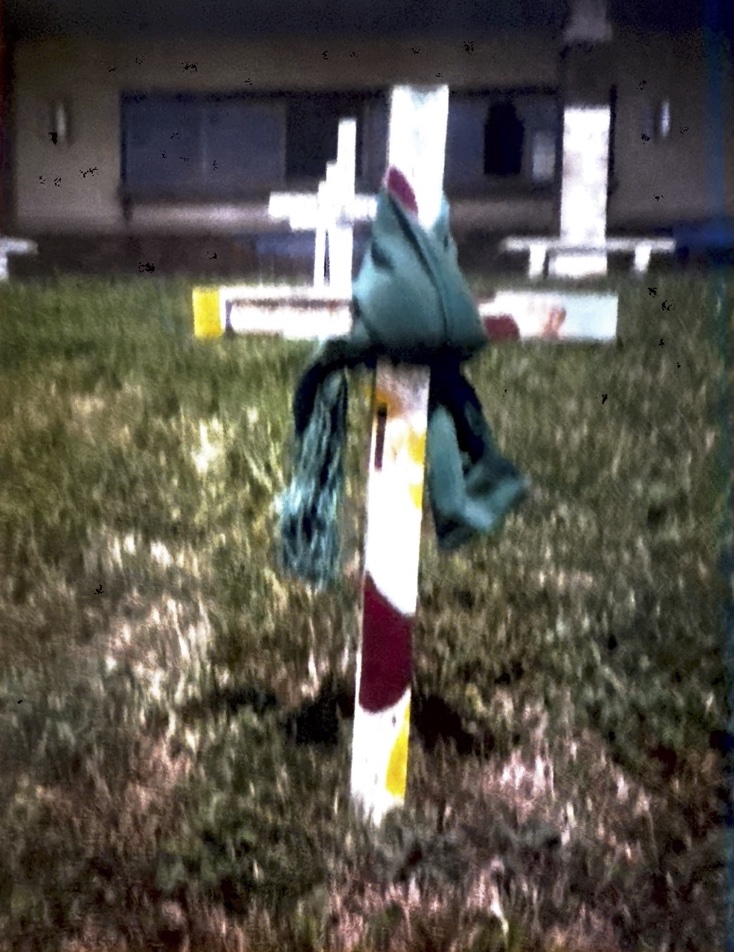
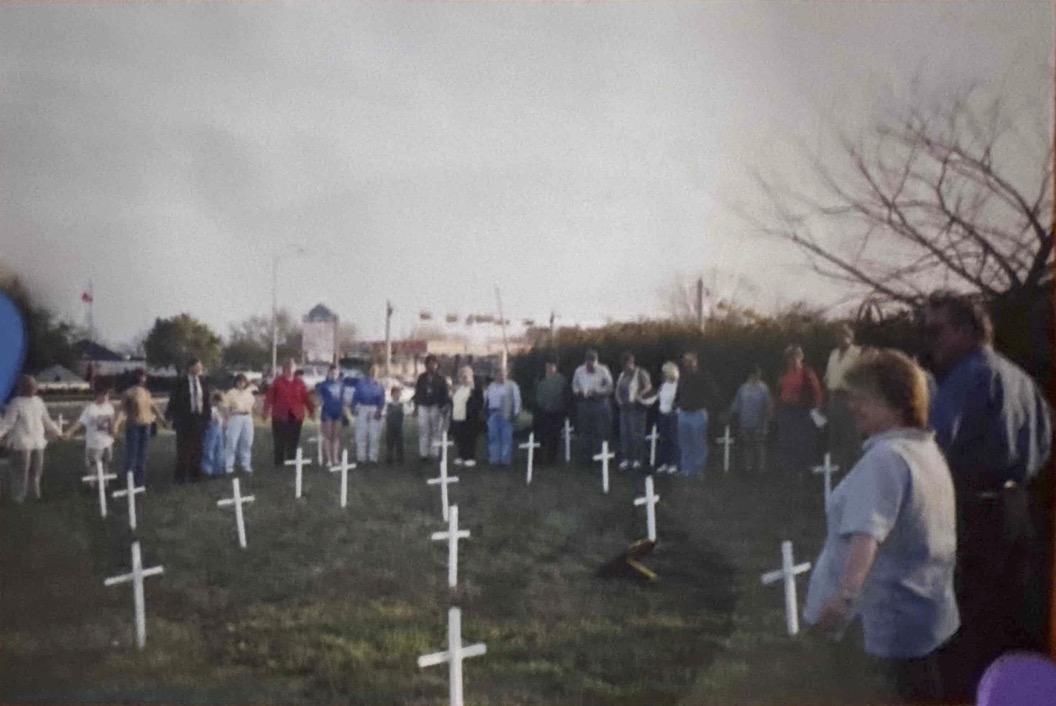
The field was dedicated each year with an afternoon church service and during the dedication service, Jim Rigby would open the floor to anyone who wanted to speak and remember their loved one. So many parents came to the services who would go up to the pulpit and tell their child’s story, most of them speaking their truth through tears. Many parents expressed their gratitude for St. Andrews being a church that allowed them to tell their story, as it was the first time in a church that they had actually been able to say their child died of HIV/AIDS. You see, for many of them, their own church had disavowed their child, refusing to let them hold a service for their child at the church they grew up in. They were forced to lie and tell other church members that their child had died of cancer or some other disease. Some reported that their small-town funeral home refused to embalm their child, so they had to transport them to a larger city that would accept their body. There were so many tears shed during these services, and we stayed and listened as long as they wanted to speak.
Toward the end of the personal remembrances, Jim would lead silent prayer and encourage those who might want to share their loved one’s name, but weren’t comfortable with speaking from the pulpit, to speak their name aloud. Following the service, the attendees would gather outside, holding hands in a large circle around the Field while a bagpiper played Amazing Grace and we closed in prayer.
A mother who attended the first service, came to every service for each of the years we had the Field and would close out each service by reading the poem, In Flanders Fields by John McRae, which began:
“In Flanders fields the poppies blow
Between the crosses, row on row,
That mark our place; and in the sky
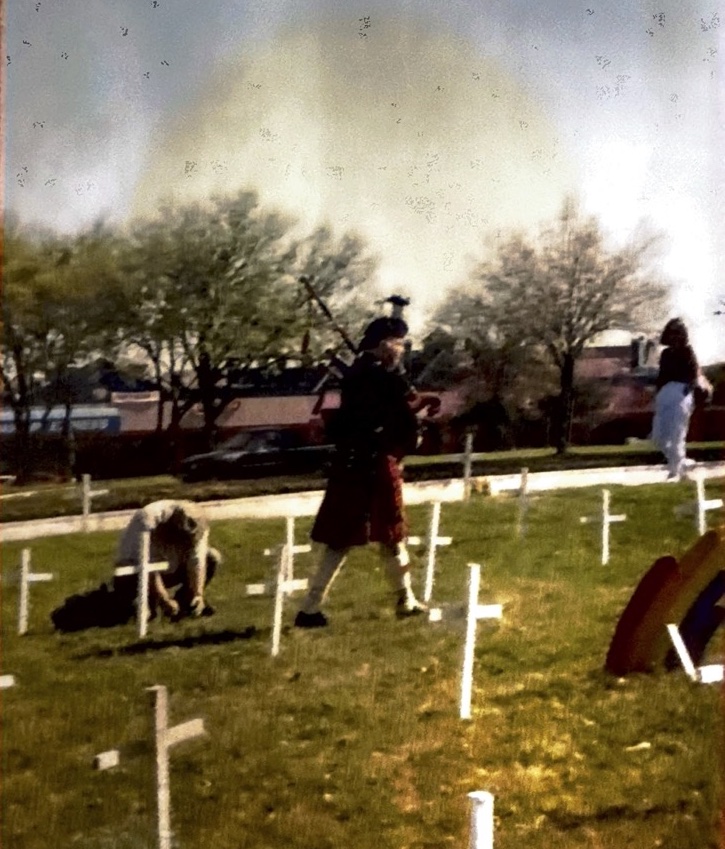
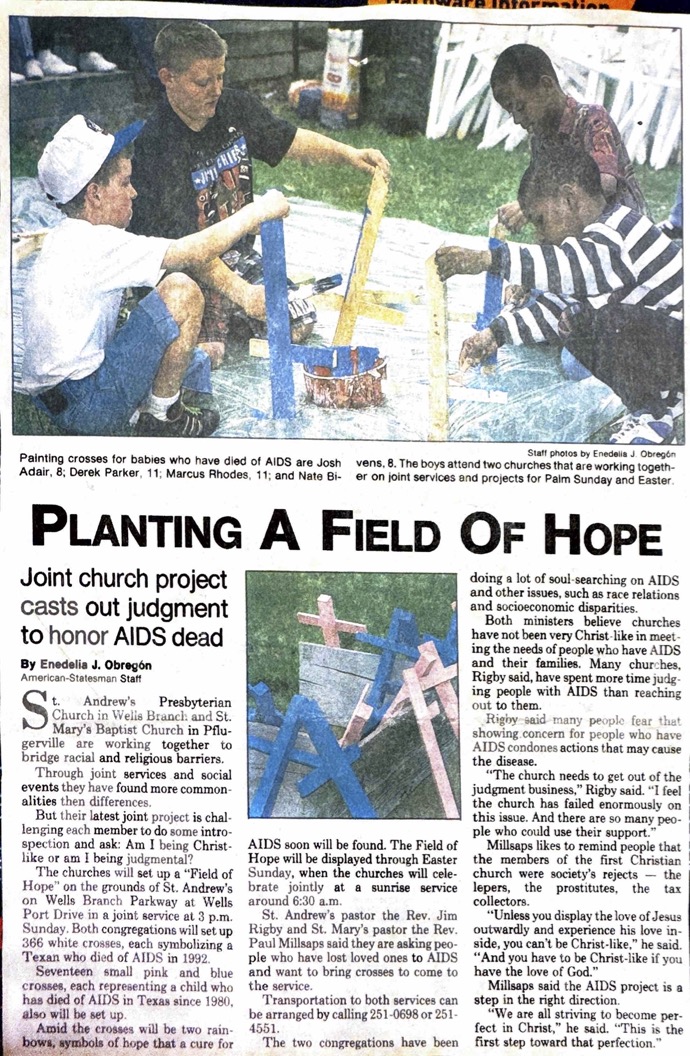
The Field of Hope transformed over the years, with the addition of tiny pink and blue crosses for children born with HIV/AIDS and eventually Stars of David and Crescent Moons were added to represent all who were affected by this disease. We held Easter Egg hunts for our children on the lawn and in amongst the crosses and my twins grew up hunting for eggs in the Field and helping to freshen up the ribbons and flowers on the crosses for two of our friends who died from HIV/AIDS. Every year local TV News covered our dedication service and the attendance at the services grew as more loved ones found out about it.
Eventually, with the development of life-saving drugs for the treatment of HIV/AIDS, being diagnosed no longer meant a death sentence and after about 10 years or so, we felt the Field of Hope had fulfilled its purpose and we ended our yearly display. The legacy of the Field of Hope lived on though, as many, like me, were drawn to St. Andrews because of its very visible display and many in the LGBTQ+ community and progressive allies found a home at St. Andrews.